

K Patel Phyto Extractions Pvt.Ltd

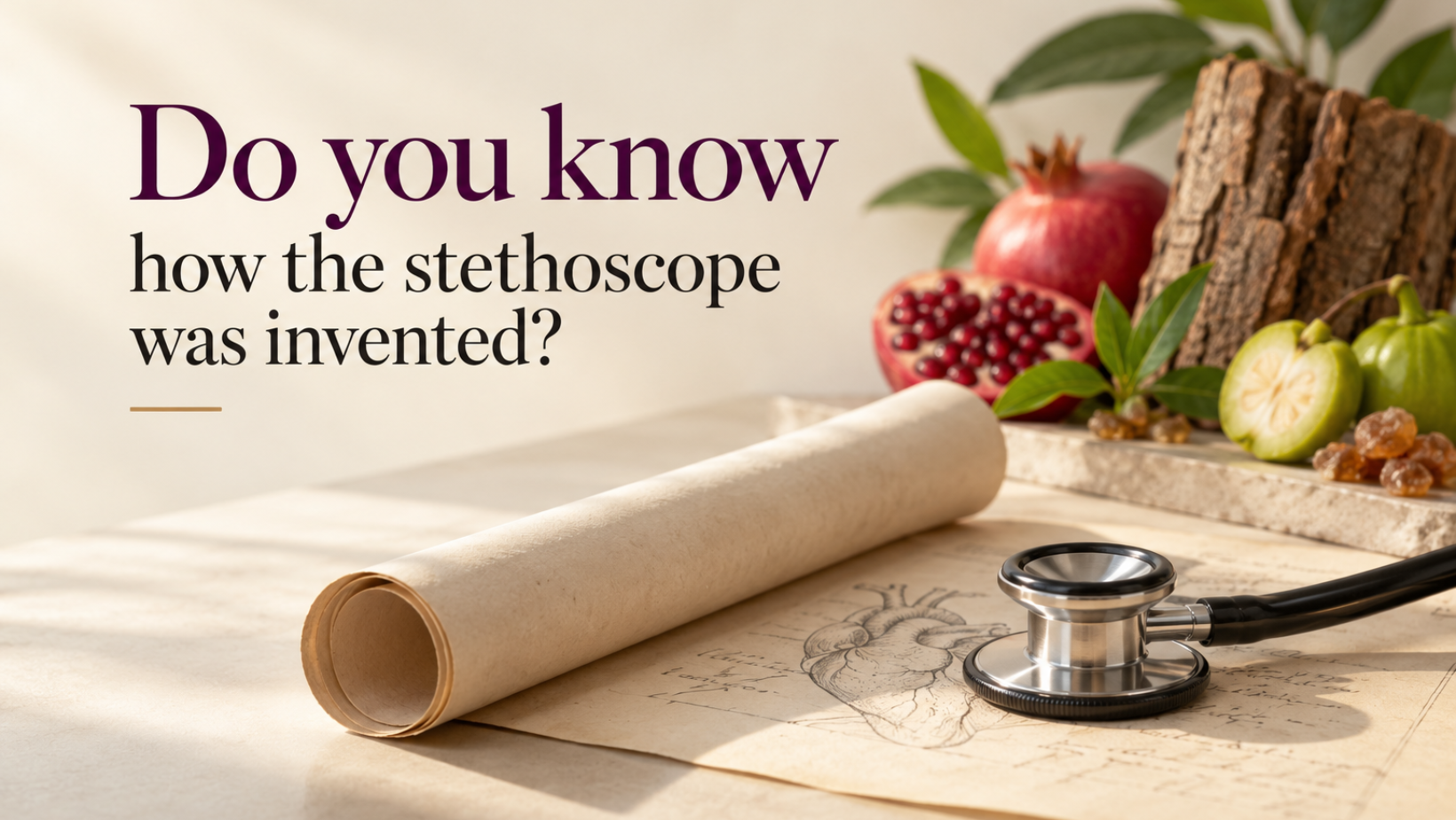
Do you know how the stethoscope was invented?

No man ever scheduled a conversation with his hormones. There's no memo, no warning, no negotiation. Testosterone just makes its decisions overnight, in the dark, while a man sleeps, and by morning he either has the raw material for a good day or he doesn't. He'll spend that day blaming his coffee, his schedule, his motivation, never once looking at the actual source. It's one of the strangest arrangements in human biology: the hormone with the most influence over how a man feels, moves, and performs is also the one he's never been taught to think about directly.To understand why it matters this much, it helps to look at exactly where testosterone shows up in a man's life, because it isn't one effect. It's three, working in different rooms of the same house.

What he heard surprised him. The paper tube carried the heartbeat more clearly than direct contact ever had, sharper, steadier, easier to trust. He refined the idea over the following months, first into a wooden cylinder, then into the instrument that would carry his name into every medical bag in the world. Some of his colleagues were skeptical at first. Direct contact had worked well enough for centuries; why did it need replacing? It took years for the stethoscope to be taken seriously, and longer still for it to become standard. But within a generation, it had become impossible to imagine cardiology without it.

It’s a good story because it’s true, and because it makes a point worth sitting with. For most of human history, nobody had a tool built for listening to the heart. What people had instead was pattern-noticing, stretched out over generations: watch enough people, long enough, and certain habits keep turning up in the households that seem to hold up better than others. Nobody was running trials. Nobody had a name for what they were tracking. They just kept doing what seemed to work, and passed it down. Long before any instrument existed to confirm it, four ingredients kept appearing in exactly that role, and it’s worth introducing them properly, because research has spent the last few decades quietly catching up to what tradition already suspected.

The Tree That Stands Its Ground
Start with the tree that seems built for the metaphor. Terminalia arjuna grows along riverbanks, arrow-straight, rarely leaning toward competition for light, tall enough to be noticed from a distance and steady enough that it rarely needs staking, even in strong seasonal floods. Ayurvedic medicine has used its bark as a heart tonic for centuries, boiled into a decoction the way some households now take a morning tablet, part of a daily rhythm rather than a treatment reserved for illness. Clinical trials on patients with heart failure have since given the tradition real backing: measurable improvement in cardiac symptoms when arjuna bark extract was added to standard treatment, and laboratory research tracing how it protects heart muscle under strain, the kind of protective effect that used to be described only in folk terms and can now be described in a peer-reviewed one.
The Fruit That Outlasts Itself
If arjuna’s case rests on tradition catching a scientific second look, pomegranate’s rests almost entirely on chemistry doing the talking from the start. The compound behind its unusually long shelf life, punicalagin, is also one of the most potent antioxidants identified in any plant, present in concentrations that make the fruit something of an outlier even among other antioxidant-rich foods. Studies have traced its effect on the lining of blood vessels, the tissue quietly responsible for how well everything downstream continues to flow, and researchers who have followed pomegranate for over a decade now count it among the more consistently evidenced fruits in cardiovascular science, a reputation that has held up in a field where most single-ingredient claims quietly fade after the first few studies.
The Resin That Takes Its Time

Where pomegranate’s evidence arrived quickly, guggul’s took the scenic route, fittingly, since the resin itself takes days just to tap from the bark of the small desert tree it comes from, collected drop by drop the way patience is collected rather than manufactured. It travelled ancient trade routes as incense long before anyone tested it in a lab, valued for centuries for reasons that had nothing to do with cholesterol. The most carefully controlled trials, including one published in JAMA, found it doing slow, cumulative work on lipid balance, the kind of progress that shows up over years rather than in any single reading, closer in character to compound interest than to a quick fix.

The Sour Fruit With a Second Job

Then there’s the one nobody was really looking at. Garcinia, a small sour fruit better known for weight management, has flavoured South Indian fish curries for generations, valued for its distinctive tartness long before it earned a place in any supplement aisle. It turns out to have a second job most people never checked for. The compound behind its reputation, hydroxycitric acid, was reviewed across the available clinical trials in 2024, and the analysis found meaningful shifts in lipid markers, the same territory a cardiologist watches as closely as a dietitian does, evidence that had been sitting quietly alongside decades of weight-management research without drawing much attention.

Two Kinds of Listening

Two centuries after Laennec’s paper tube, listening to the heart has become extraordinarily precise. Echocardiograms, wearables, blood panels down to the molecule, tools that can now flag a problem before a single symptom appears. What’s easy to forget, in the middle of all that precision, is that listening was never only a clinical act. It was also a kitchen habit, a family recipe, a bark tea nobody could fully explain but nobody stopped making either, a form of attention that ran in parallel to medicine for most of history rather than beneath it. Both kinds of attention were trying to catch the same thing: a heart that rarely announces trouble loudly, and almost always gives some warning first, if anyone happens to be listening closely enough to notice it.

The Gap Between Warning and Noticing

That gap, between the warning and the noticing, is exactly what this year’s World Heart Day is built around. The organizers behind the day point out that most cardiovascular disease is preventable, and that the deaths it causes are disproportionately the ones that could have been caught earlier, by a person, a habit, or a system paying closer attention. It’s a fair thing to sit with, and a reminder that awareness campaigns and kitchen traditions are, in the end, running the same errand: catching what would otherwise go quiet until it’s too late to stay quiet.


This year's World Heart Day carries a simple instruction: don't miss a beat.

Laennec didn’t invent listening. He just built a better tool for something people, and evidently a few resilient trees and fruits, had already been doing for a very long time. The instrument changes. The instruction underneath it hasn’t, and isn’t likely to.

Subscribe for more stories that go beyond the extract.

About Us

KP Phyto is positioned to take on global supply chain demands, and is the Indian market leader catered to a wide range of ingredients for food, pharma, nutraceutical, dietary supplements and cosmetics. Thank you for your interest in our newsletter & allowing us to provide you with deep dive perspectives on Indian botanicals.

Recent Posts
Share
Our Products
Iniqure Now

[metform form_id="14477"]

This will close in 0 seconds

    This will close in 0 seconds

      This will close in 0 seconds

        This will close in 0 seconds

        error: Content is protected !!