

Five days, five meanings
Diwali is a five-day celebration, and each day has its own meaning.
- Dhanteras: buying something new, often gold or silver, for good fortune.
- Choti Diwali: a day of cleansing, often begun with a warm oil bath.
- Lakshmi Puja: the main night, when families pray to Lakshmi, goddess of wealth and wellbeing.
- Govardhan Puja: a thank-you to nature, and New Year in Gujarat and some other regions.
- Bhai Dooj: a celebration of brothers and sisters.
Before it all, homes are cleaned and doorsteps decorated with rangoli, bright floor patterns of coloured powder or flowers. People wear new clothes and share mithai, traditional sweets, much like gifts at Christmas.
The festival after the festival
A wedding for a plant
Tulsi is the Indian name for holy basil, a close cousin of the basil you might grow in your kitchen. In India, it is far more than a herb. Many Hindu homes keep a Tulsi plant in the courtyard or on a balcony, usually in a raised pot, and care for it every day. Ancient texts call it Vishnu Priya, “the beloved of Vishnu.” Vishnu is one of the most important gods in Hinduism, seen as the protector of the world.
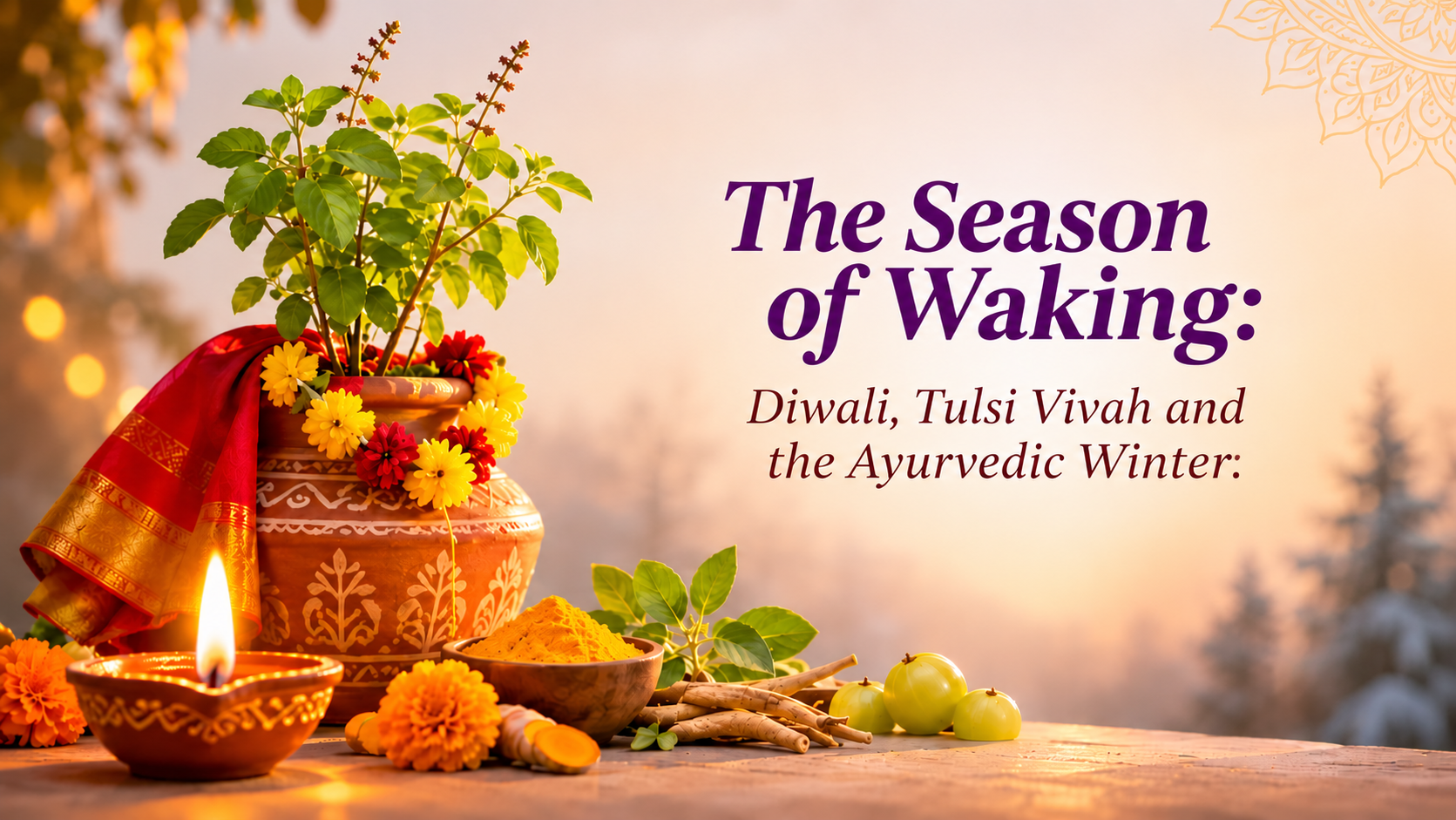
On Tulsi Vivah, families dress the plant as a bride. They paint her pot, drape a red cloth over her leaves and place bangles beside her. She is then married to Vishnu, who is often represented by a small sacred stone called a Shaligram, or by an image of Krishna, one of Vishnu’s forms. There are prayers, songs and sweets, just like at a real wedding.
The day the gods wake up
The day of Tulsi Vivah has a second name: Prabodhini Ekadashi, which means “the eleventh day of awakening.” Hindu tradition says that Vishnu sleeps for four months during the monsoon rains. On this day, he wakes up.
This has a very real effect on daily life. During those four months, many families avoid holding weddings. Once Vishnu is awake and Tulsi’s wedding is done, India’s wedding season officially begins. Music returns, wedding tents go up and the celebrations start again.
It is a beautiful idea to place right at the start of winter. Before the cold months arrive, the culture tells a story about a long, good rest coming to an end. Sleep is not seen as wasted time. It is what makes a fresh start possible.
What Ayurveda says about winter?
Ayurveda is India’s traditional system of medicine, practised for thousands of years. It pays close attention to the seasons, because it sees the human body as part of nature. One of its oldest texts, the Charaka Samhita, describes early winter as the time when digestion is at its strongest. Cold weather holds the body’s warmth inside, appetite grows, and the body can handle richer food than it could in summer.
You can see this in Indian kitchens every winter. People make laddoos, small round sweets, from sesame seeds and jaggery, an unrefined cane sugar. They add ghee (clarified butter), nuts and dried fruit to their meals. Many drink warm milk with turmeric before bed. Massaging the skin with warm oil is common too, to protect it from the dry winter air. None of this came from a diet book. It is seasonal common sense, passed down through family recipes.
Winter also asks for something else: more rest. The nights are longer, darkness comes earlier and nature slows down. Modern life does not slow down with it. We stay on our screens late into the night. Year-end deadlines pile up. Festivals and weddings fill every weekend. Many of us sleep less in exactly the months our bodies want more.
The leaf at the heart of it all
So it is fitting that the plant at the centre of this season is Tulsi. In Ayurveda, Tulsi belongs to a group of herbs called Rasayanas. These are plants valued for helping the body stay balanced and resilient over time, rather than for quick fixes. For generations, Indian families have added a few leaves from the courtyard plant to a warm evening drink, as a small act of daily care.
That same tradition is the starting point for Ocitum™, our standardized Tulsi extract developed for sleep and relaxation. One idea guides it. A sedative simply switches the body off. Restorative sleep is different. It is the kind of sleep that lets you wake up feeling clear, calm and ready for the day, much like the awakening the festival celebrates. Ocitum™ is designed to support the body’s own natural move into rest, not to force it.
Until the lamps return
By now, the Diwali lamps have been packed away for another year. The Tulsi plants that were dressed as brides are quietly back to being part of the home. The wedding season is in full swing, and kitchens across India have turned to the warm, rich foods of winter. Somewhere, a grandmother is still dropping a few Tulsi leaves into a pot of something warm before bedtime.
That is the gentle magic of this time of year. The big celebrations fade, but the warmth stays. It lives in the kitchen, in the evening cup, and in the slower pace of the longer nights.
Wherever you are reading this, we hope a little of that warmth finds its way to you. A candle glowing on a cold evening. Something warm to sip before bed. A good, deep night’s sleep, and a bright morning waiting on the other side.
From all of us at KP Phyto, warm wishes for the season ahead.